
Introduction
Being a basketball parent often feels like navigating a pressure cooker. You are constantly balancing high hopes, tough losses, and the endless questions: Are they practicing enough? Are they on the right team? How do I help without hovering?. It is easy to get caught up in the noise, but here is a surprising truth: a recent survey of over 500 parents revealed that the single toughest job isn’t the commute or the cost—it is managing their child’s confidence.
Your role on the sideline is arguably just as important as the coach’s role on the bench. To help you navigate this journey, we have compiled the ultimate survival guide. We will cover everything from selecting the best basketball gear for youth to the nuances of supporting young athletes through mental slumps. These essential basketball parent tips are designed to help you play the “long game,” ensuring your child thrives as a person, not just a player.
Navigating the Mental Game
The drive or walk home after a game is often more critical than the game itself. It is in this quiet, enclosed space where a young athlete’s confidence is either cemented or crumbled. A recent survey of over 500 parents highlighted that “managing confidence” is actually the number one challenge families face—harder than the financial cost or the time commitment.
The Danger of Conflicting Messages
One of the quickest ways to damage a player’s development is by creating confusion. Your child just spent an hour listening to their coach. If you get in the car and immediately contradict the coach’s instructions, you aren’t helping; you are forcing them to choose between their mentor and their parent.
- The Trap: Offering technical advice (“You should have shot that,” or “Why didn’t you drive left?”).
- The Reality: As youth coaches warn, this hesitation is the enemy of confidence. When a player is worried about pleasing you and the coach simultaneously, their processing speed slows down, and they play stiff.
The Six Most Powerful Words
So, what should you say? In a world of complex drills and high-stakes travel ball, the most effective tool for supporting young athletes is incredibly simple. It isn’t a critique of their jump shot or a lecture on hustle.
It is simply: “I love watching you out there.”
Why is this phrase so effective?
- It separates love from performance: It tells your child that your approval isn’t tied to how many points they scored.
- It releases pressure: It allows them to own their journey.
- It builds grit: When they know they have a safe place to land, they are more willing to take risks on the court.
The 24-Hour Rule
If you do have constructive criticism or need to discuss a behavioral issue (like attitude or effort), try the “24-Hour Rule.” Emotions are high immediately after the buzzer. Wait 24 hours before bringing up the game. This gives both you and your athlete time to decompress, ensuring the conversation is logical, not emotional.
The Gear Guide: Investing Wisely
While our recent survey showed that managing confidence is tougher than managing finances, the cost of youth sports is undeniable. Between travel teams and tournament fees, the budget gets tight. However, when it comes to the best basketball gear for youth, the goal isn’t to buy the “hype”—it’s to buy “longevity.”
Parents often focus on tangible things, but we need to view gear as insurance for the body. Here is how to navigate the store without breaking the bank.
Shoes: Grip over Hype
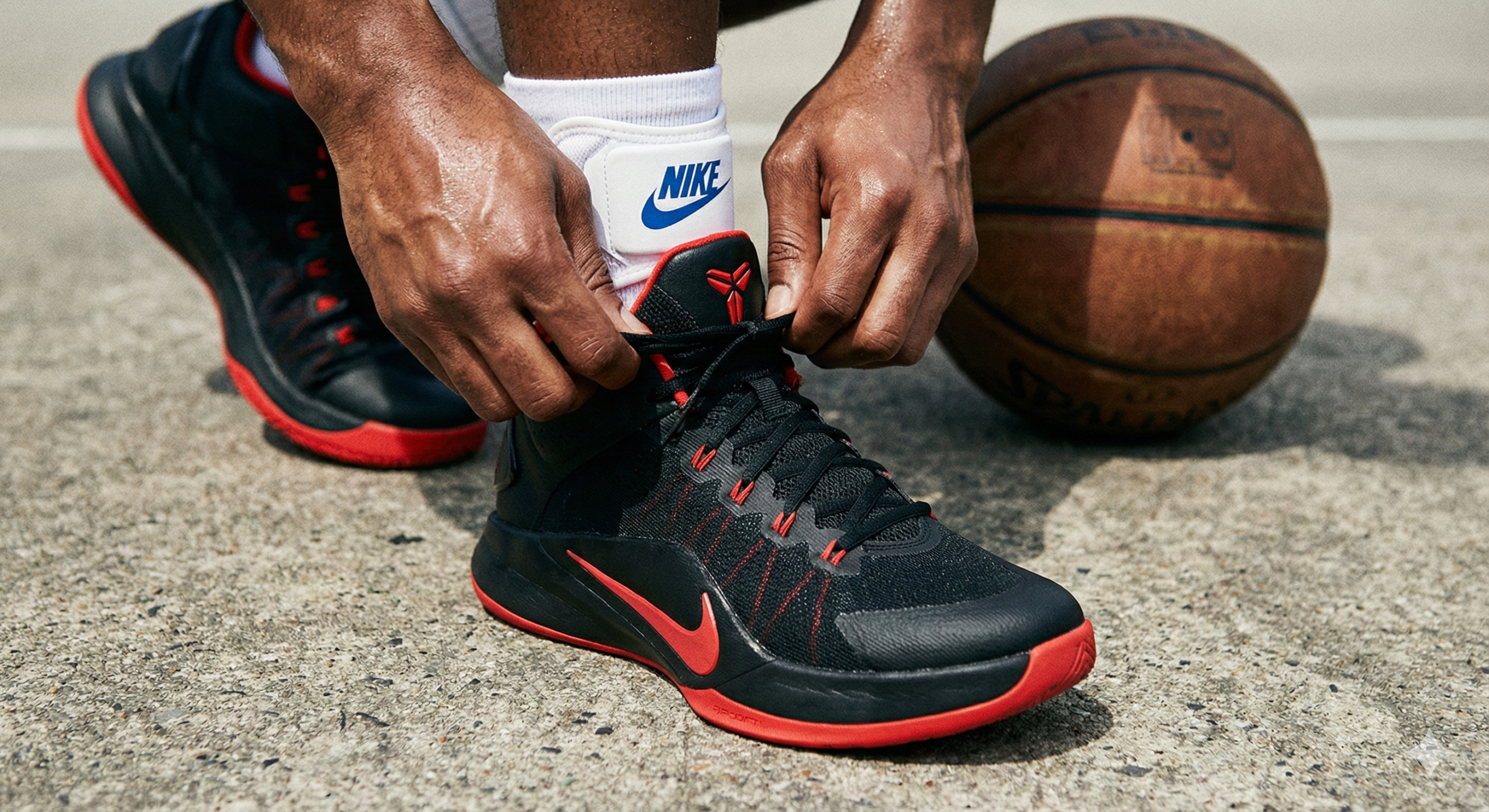
The most critical tool for supporting young athletes is their footwear. You don’t need the signature shoe of the moment.
- The Focus: Look for lateral stability and grip. Basketball involves violent side-to-side cutting. Running shoes (designed for forward motion) are a recipe for rolled ankles on a court.
- The Tip: If your child plays primarily outdoors, avoid “soft rubber” soles designed for indoor hardwood. The concrete will chew them up in two weeks. Look for “XDR” (Extra Durable Rubber) tags.
Ankle Braces: Prevention or Crutch?
This is a common debate among basketball parent tips.
- The Consensus: For players recovering from an injury, active ankle braces are non-negotiable. For healthy players, many coaches prefer strengthening the ankle naturally through proprioception drills. However, having a pair in the bag “just in case” is smart parenting.
The “Indoor” vs. “Outdoor” Ball
This is a simple lesson in financial literacy for your athlete.
- The Rule: A leather or composite indoor ball (often $60+) never touches the driveway. The concrete absorbs the moisture from the leather and ruins the grip instantly.
- The Fix: Buy a dedicated rubber outdoor ball for home practice. It teaches your child to respect their tools and value the investment you made in their equipment.
Fueling the Ferrari: Nutrition and Recovery
We often treat our young athletes like high-performance vehicles on the court, but fuel them like sedans off the court. One of the most overlooked basketball parent tips is that performance starts at the dinner table, not the layup line.
As we discussed earlier, a major differentiator in youth players is “processing speed”—the ability to make split-second decisions. The brain is a high-energy organ; if it is dehydrated or sleep-deprived, that processing speed slows down, leading to mistakes that look like a lack of skill but are actually a lack of fuel.
Pre-Game Fuel
Avoid the heavy “carb coma” right before tip-off.
- The Strategy: Focus on easily digestible carbs and lean proteins 2–3 hours before the game.
- The “Why”: You want the blood in their muscles, not stuck in their stomach digesting a heavy burger.
Hydration Hacks
Many parents think hydration happens during the timeouts. By then, it’s too late.
- The Rule: Hydration for Saturday’s tournament starts on Thursday.
- The Impact: Even slight dehydration causes “mental fatigue,” which can have a massive impact on a young athlete’s performance and love for the game.
Sleep: The Ultimate Performance Enhancer
In a culture that glorifies the “grind,” sleep is often the first thing to go.
- The Reality: Recovery is where the growth happens. Deep sleep is when the body repairs the micro-tears from practice and consolidates the muscle memory learned that day.
- The Lifestyle: Basketball is not just a sport; it is a lifestyle that requires discipline off the court to succeed on it. Prioritizing an 8-hour sleep window is just as important as the one-hour practice window.
Converting Court Wins to Life Wins
The scoreboard will eventually fade, but the character traits built on the hardwood last forever. Building character through sport is the ultimate return on investment for any basketball parent.
When we shift our focus from winning the weekend tournament to playing the “Long Game,” we teach our children lessons that apply to the boardroom just as much as the locker room.
Activity is Not Achievement
A common trap for both parents and players is mistaking “busyness” for progress. It is a misconception that simply spending more hours in the gym automatically leads to improvement.
- The Lesson: Teach your child the concept of “Deliberate Practice.” Shooting around aimlessly is just activity; shooting with a specific goal and embracing the failure that comes with it is achievement.
- The Life Skill: This teaches them that showing up isn’t enough—you have to show up with intent.
The Comparison Trap
One of the most damaging mistakes a parent can make is comparing their child’s progress to another player’s. Your child’s journey is not a carbon copy.
- The Reality: The developmental path of a 10-year-old is vastly different from an 18-year-old with a scholarship.
- The Advice: Run your own race. Trying to copy another player’s success story ignores your child’s unique physical and emotional timeline. This reinforces the vital life skill of self-worth independent of others’ achievements.
Resilience on the Bench
Eventually, every player sits. How they handle the bench is a better predictor of future success than how they handle the ball.
- The Opportunity: Use these moments to teach leadership. Can they be the loudest person cheering for their teammates? This builds the “we before me” mentality that every future employer values.
Conclusion: The Long Game
Ultimately, a parent’s role in their child’s basketball career is to play the long game. The trophies will collect dust and the jersey will eventually be outgrown, but the character traits developed—resilience, discipline, and self-worth—will last a lifetime.
Your goal isn’t just to raise a D1 athlete; it is to raise a functional, confident adult. By focusing on supporting young athletes through the highs and lows, managing their confidence rather than critiquing their performance, and providing unconditional love, you are building a foundation that supports the person, not just the player.
Years from now, when the games are over, your child won’t remember the score of the 4th-grade championship. But they will remember how you made them feel on the ride home.
Want to go deeper?
Helping your child develop grit off the court is just as important as their skills on it. Seemy free guide, “5 Life Lessons Basketball Taught Me (That School Didn’t),” to help turn their court experience into a life advantage.