

There comes a quiet moment for every serious basketball player. The high school glory days fade, the college eligibility runs out, or the overseas contracts stop coming. You look at your closet full of gear and your 10,000 hours of court time and wonder: “What now?”
For many, the end of a playing career feels like an identity crisis. But it shouldn’t be. It should be a business launchpad.
The reality is that while your playing window is small, your earning window is indefinite. The youth sports industry is a multi-billion-dollar machine, fueled by parents who are desperate to give their children an edge. They aren’t just looking for babysitters; they are looking for mentors who have “been there” and can teach the skills their kids need to make the team.
If you have game knowledge, you have a sellable asset. However, being a great player doesn’t automatically make you a profitable coach. Learning how to start a basketball training business requires a shift in mindset—from athlete to entrepreneur.
In this guide, we are going to bridge that gap. We will move past the “hobby” phase and break down exactly how to monetize your passion, structure your pricing, and build a roster of clients who are eager to pay for your expertise. It’s time to turn your hustle from the court into real-life wealth.
Defining Your Coaching Identity
Before you buy your first bag of cones or rent a local court, you have to understand one thing: You are the product. When someone is looking for basketball side hustles, they aren’t just paying for a drill; they are paying for your specific expertise and the way you communicate it.
To succeed in how to start a basketball training business, you must move away from being a “generalist” and become a “specialist.”
What is Your Specialty?
The “Jack of all trades” is rarely the one who charges the highest rates. To stand out, you need a “hook.” Are you the coach who helps kids fix a broken jump shot? Are you a defensive specialist who builds “lockdown” players? Or perhaps your brand is built on the mental game and leadership?
By narrowing your focus, you make it easier for parents to say, “That is exactly what my child needs.” ### Who is Your Avatar? You cannot coach everyone. A session for a 7-year-old beginner looks nothing like a session for a Division 1 college prospect.
- The Beginner: Needs fun, engagement, and basic motor skills.
- The High Schooler: Needs high-intensity, game-speed reps and tactical IQ.
- The Parent: (This is who actually pays). They need to see discipline, safety, and progress.
Decide who you are serving before you start marketing. Making money as a basketball coach becomes much easier when you know exactly who you are talking to in your social media posts and flyers.
Overcoming Imposter Syndrome
One of the biggest hurdles in starting a basketball training business is the feeling that you aren’t “qualified” because you didn’t play in the NBA or a high-level college program.
Here is the truth: You only need to be two steps ahead of the person you are teaching. If you have played high school ball and understand the fundamentals of grit and discipline, you have more than enough value to offer a 10-year-old just starting their journey. Your experience is your credential.
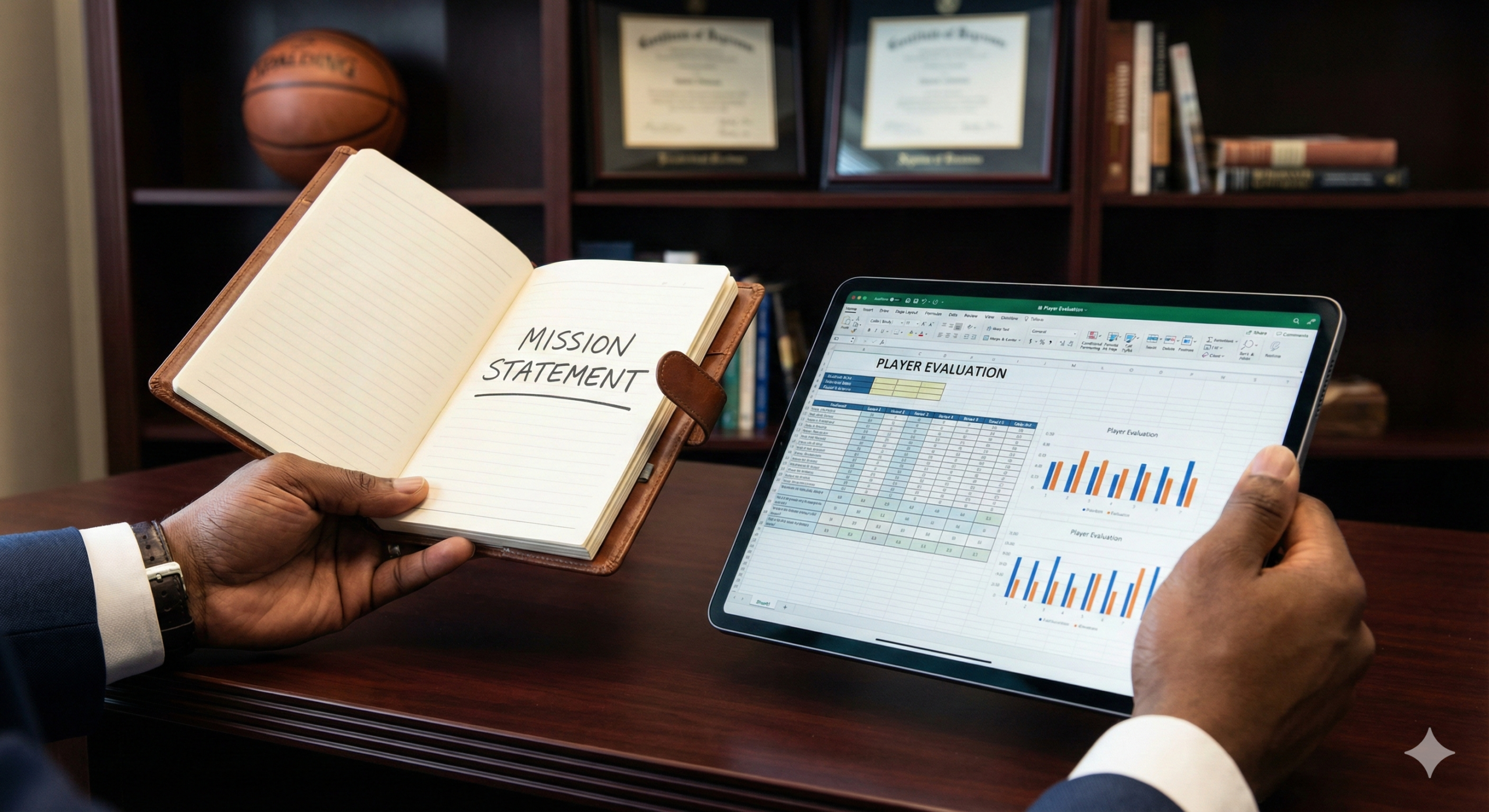
The Boring (But Necessary) Stuff
If you want to move beyond just another one of the many basketball side hustles and build a scalable brand, you have to treat it like a business from day one. Many trainers fail not because they lack basketball knowledge, but because they lack infrastructure.
Skipping these steps might save you a few dollars today, but it could cost you the entire business tomorrow. Here is how to lay a professional foundation for your basketball training business.
Legal Protection: Waivers and Insurance
In the world of sports, injuries are not a matter of “if,” but “when.” Someone will eventually roll an ankle or collide with another player.
- Liability Waivers: You must have a signed waiver for every single athlete before they step on the court. This document should clearly state that you are not liable for injuries sustained during training.
- Professional Liability Insurance: This is non-negotiable. Most gym rentals will require you to provide a Certificate of Insurance (COI) before they let you use their space. It’s relatively inexpensive (often less than $30–$50 a month) and protects your personal assets if a legal dispute arises.
Scouting Locations: Where the Magic Happens
The quality of your location often dictates the premium you can charge.
- Public Parks: Great for keeping overhead low when you are just learning how to start a basketball training business. However, you deal with unpredictable weather, wind, and the risk of “random” players taking over your court.
- School & Community Gyms: These offer a professional feel and a controlled environment. Reach out to local private schools or churches. Pro tip: Offer to run a free clinic for their students in exchange for a discounted court rental rate.
- Driveway Training: If you have a high-quality hoop at home, this is the ultimate low-overhead model. Just ensure your neighbours (and your insurance) are okay with it.
The Equipment Checklist: The Tools of the Trade
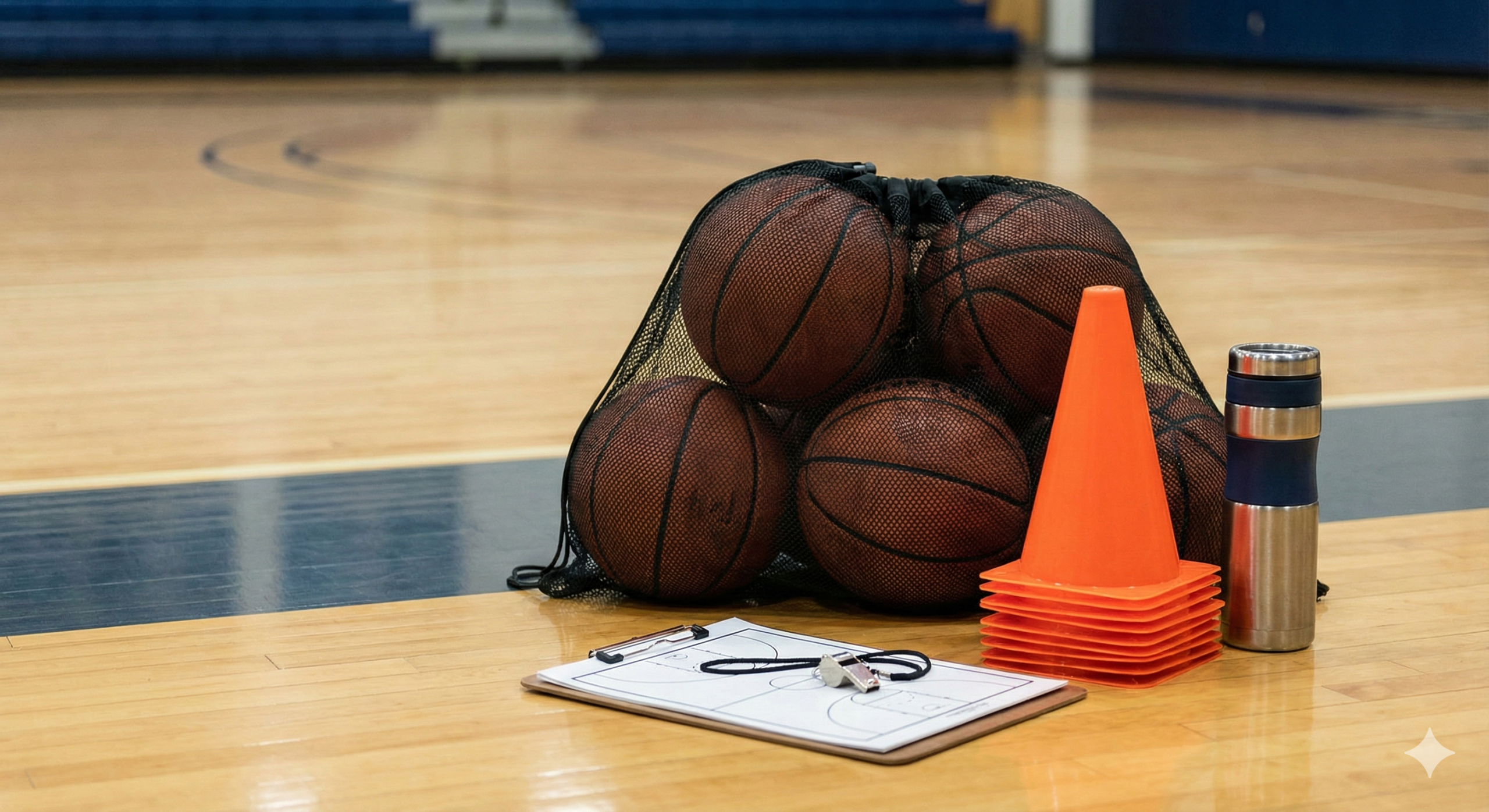
You don’t need a million dollars’ worth of tech to start, but you do need “The Essentials.” Having professional gear shows parents that you are serious.
- The Essentials: 10–12 high-quality cones, a heavy-duty ball bag, and a professional whistle.
- The “Value Add” Gear: Agility ladders, weighted basketballs, and “D-Man” defenders. These allow you to run more complex drills.
- Recording Tools: A simple tripod for your phone is essential. Not only does this allow you to show players their form in real-time, but it also gives you the raw footage you need for marketing. (Check out my recommended products here)
How to Fill Your Roster Without Paid Ads
You have the insurance, the cones, and the court. Now you need the players. Many people think they need to spend hundreds of dollars on Facebook ads to find clients, but that is a mistake when you are just learning how to start a basketball training business.
In the beginning, your goal isn’t “reach”—it’s trust. You need five “seed” clients who will provide the testimonials and word-of-mouth momentum to carry you for the next year. Here is how to get them.
The “Free Clinic” Strategy: The Power of the Lead Magnet
The fastest way to prove you are a high-value coach is to give away a sample for free. This is the “Costco model” applied to the court.
- The Move: Organize a one-hour “Skills & Scrimmage” clinic at a local park or community center.
- The Goal: Don’t focus on profit here. Focus on gathering contact information (emails and phone numbers) and capturing video.
- The Pitch: At the end of the free hour, offer a “First Month Founder’s Discount” to anyone who signs up for a weekly slot on the spot. By removing the financial risk, you make it easy for parents to say yes.
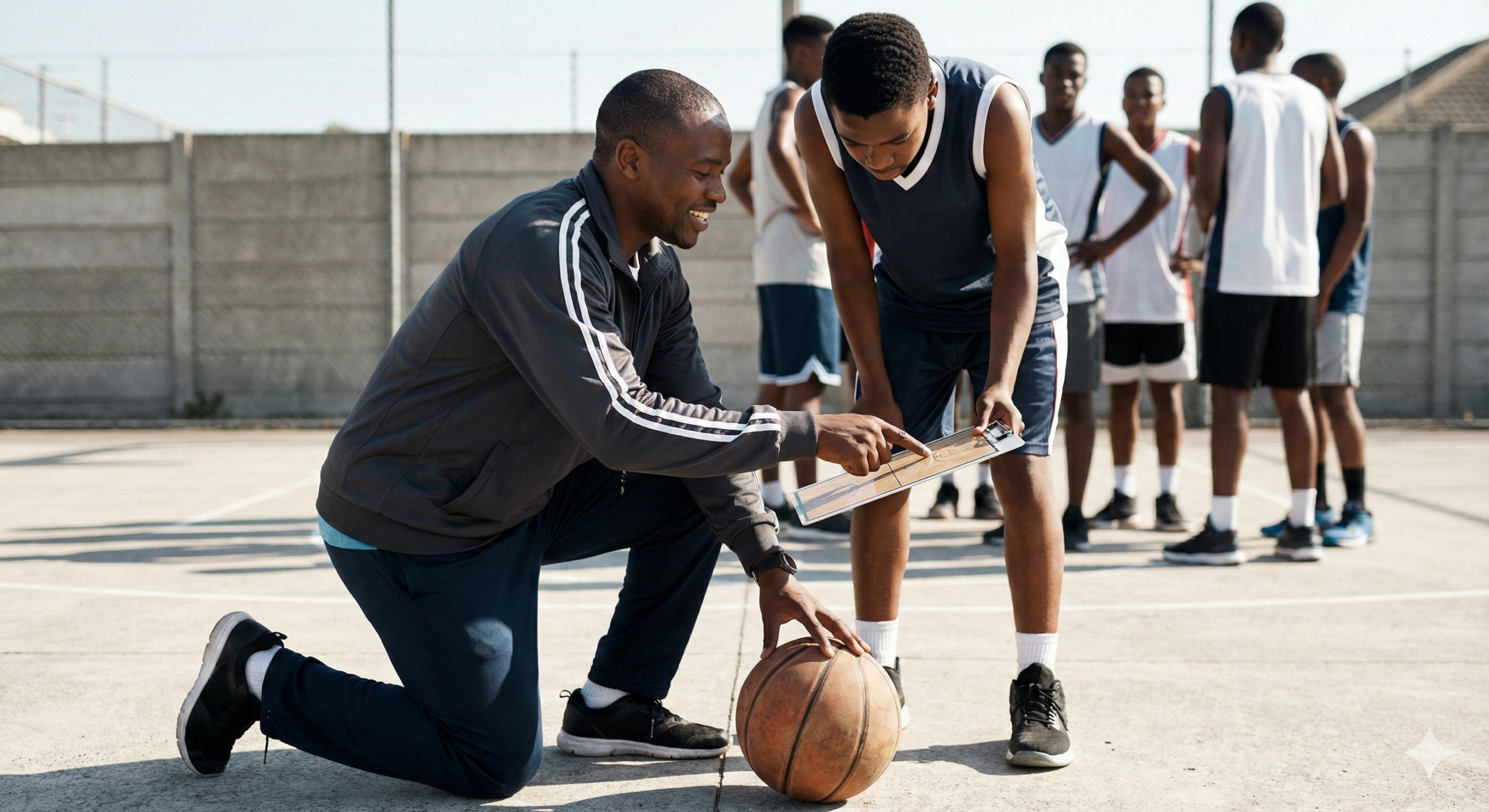
Leveraging Social Media: Document, Don’t Just Create
You don’t need to be an “influencer” to succeed at making money as a basketball coach, but you do need a digital resume. When a parent hears your name, the first thing they will do is look you up on Instagram or TikTok.
- Show, Don’t Tell: Don’t just post a photo of a basketball. Post a 30-second clip of you explaining a specific footwork detail or correcting a player’s shooting form.
- The Value Add: By sharing free tips online, you are demonstrating your competence. Use your basketball training at home drills as content! It shows you are creative and can work in any environment.
Networking with the “Gatekeepers”
You don’t need to find 50 parents; you need to find three people who already know 50 parents. These are your gatekeepers: AAU coaches, PE teachers, and local rec league coordinators.
- The Approach: Don’t ask them for clients. Ask them how you can help their team.
- The Offer: “I noticed your 5th-grade team struggles with ball handling. I’d love to come by for 20 minutes and run a specialized dribbling circuit for them, totally free.”
- Once the kids love you and the coach sees the improvement, the referrals will happen naturally.
The Power of Word-of-Mouth Referral Incentives
Once you get your first two or three clients, they become your sales team. But you have to incentivise them to speak up.
- The Referral Program: Tell your current parents, “If you refer a friend and they sign up for a month, your next session is free.”
- This is one of the most effective basketball side hustles growth hacks. Parents talk to other parents at games; give them a reason to mention your name.
Knowing Your Worth: Pricing and Programming
One of the hardest parts of learning how to start a basketball training business is the moment you have to tell a parent your price. There is often a lingering “guilt” in charging for something you love doing, but remember: you aren’t just charging for 60 minutes of your time. You are charging for your 15 years of experience, your equipment, your insurance, and the transformation you are providing for their child.
If you want to move beyond simple basketball side hustles and into a career that provides financial freedom, you have to structure your business for stability, not just “pocket change.”
Pricing Models: Sessions vs. Packages
If you charge per session (e.g., $50 for one hour), you are at the mercy of the parents’ schedule. If they cancel, you don’t get paid, but you still had to pay for the court.
- The “Drop-In” Model: Great for testing the waters, but terrible for cash flow.
- The “Package” Model (Recommended): Sell sessions in blocks of 4, 8, or 12. For example: “One session is $60, but a 4-pack is $200 ($50/session).”
- The “Membership” Model: This is the gold standard for making money as a basketball coach. Parents pay a flat monthly fee for 1 or 2 sessions per week. This creates “recurring revenue,” which is the foundation of any successful business.
The 60-Minute Blueprint
To charge premium prices, you must provide a premium experience. Never step onto the court without a written plan. A high-value session usually follows this flow:
- The Intro (5 Mins): Review the “Homework” from last week. This builds accountability.
- Warm-Up & Ball Mastery (10 Mins): High-intensity stationary and moving handles to get the heart rate up.
- The Primary Skill (20 Mins): Deep dive into the “Theme of the Day” (e.g., Finishing at the rim, shooting mechanics).
- Game-Speed Application (20 Mins): Drills that involve a “decision.” Don’t just have them shoot; have them read a “defender” (you) and make a play.
- The Wrap-Up (5 Mins): Recap the three main takeaways and assign their home “Growth Plan.”
The “Differentiator”: Providing Homework
Why should a parent pay you instead of the guy down the street? Because you care about the other 167 hours of the week when the athlete isn’t with you. At the end of every session, send a quick text or email with two drills they should do at home. This simple act of “after-service” makes your training feel like an ongoing mentorship rather than a one-off transaction. This is how you build the “Character that Wins” while simultaneously growing your brand.
Scaling Your Hustle: Beyond the One-on-One
Once you have your first five to ten clients, you will quickly realize one thing: your time is finite. There are only so many hours in an evening and only one of you. To truly build wealth and move from a “side hustle” to a significant income stream, you have to learn how to scale.
Scaling isn’t about working harder; it’s about working smarter by leveraging your time and your brand.
Small Group Training: The Math of Leverage
The most immediate way to scale is moving from 1-on-1 sessions to small group training (2–6 players).
- The Math: If you charge $60 for a private hour, that is your cap. But if you charge $30 per player for a group of six, you just turned that same hour into $180.
- The Benefit: Players often prefer this because it allows for competitive drills, 1-on-1 play, and a more social environment.
Seasonal Clinics and Holiday Camps
Camps are the “big wins” in the coaching world. By organizing a 3-day clinic during a school break, you can serve 20–50 kids at once. This requires more planning and perhaps hiring an assistant (another “hustler” looking to learn), but the payout can equal a month’s worth of private sessions in a single weekend.
Digital Products: Earning While You Sleep
This is the ultimate goal of the “Wealth” pillar at HoopToGrow. Once you have a proven system of drills or a specific philosophy, you can package it into a PDF guide or a video course.
- Instead of teaching “The Perfect Jump Shot” 100 times in person, you record it once and sell it 1,000 times online. This creates passive income that frees you up to focus on high-level mentorship.
Merchandise and Apparel
Don’t underestimate the power of a brand. When your players wear a “HoopToGrow” or “[Your Name] Training” t-shirt to school, they are walking billboards. Selling gear isn’t just about the $10 profit per shirt; it’s about building a community that people want to belong to.
Conclusion: Build a Legacy, Not Just a Lesson
Transitioning from the hardwood to the business world is one of the most rewarding moves an athlete can make. You aren’t just “coaching basketball”—you are building a platform that shapes the next generation of men and women while creating financial security for yourself.
Starting might feel overwhelming, but remember: every elite trainer started with one ball, one player, and a local park. Now that you have a roadmap for how to start a basketball training business, the only thing left to do is take the first shot. Don’t wait for the perfect moment or a fancy website. Get your insurance, grab your cones, and go provide value to a kid who needs your mentorship.
Success on the court is measured by the scoreboard. Success in this business is measured by the impact you leave on your players and the freedom you build for your future.
Need a Coach for Your Business?
You don’t have to navigate the transition from athlete to entrepreneur alone. If you’re ready to skip the “rookie mistakes” and fast-track your coaching brand, I can help.
[Apply for my Mentorship Program] today, and let’s work together to turn your passion for the game into a professional powerhouse.