
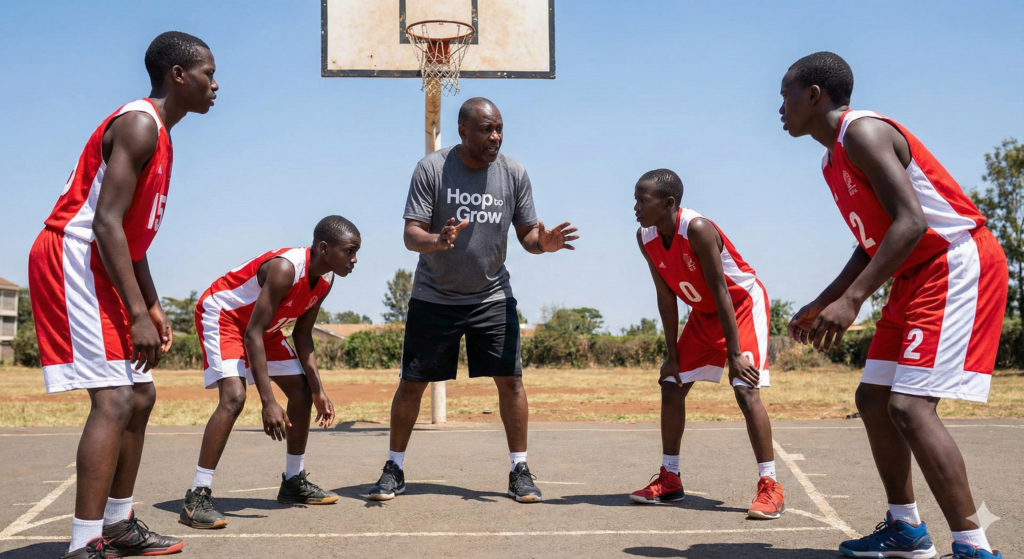
Kobe Bryant once famously said, “Footwork is one of the most under-taught aspects of the game.” He knew that before you can shoot like a pro or handle the rock like a guard, you have to be able to get to your spot. The game of basketball isn’t played with your hands; it is played from the ground up.
Yet, walk into any gym, and what do you see? Players launching half-court shots or practising fancy dribble moves. Parents and players often focus heavily on these tangible skills like shooting form or dribbling speed, ignoring the engine that makes those skills usable: the feet. If your feet are slow or clumsy, your handle doesn’t matter because you’ll never get past your defender.
The biggest myth in player development is that you need a full hardwood court to improve your agility. The truth is, elite balance, explosiveness, and pivot mechanics can be built in a simple 6×6 foot square in your garage or living room. You don’t need a rim to become a scoring threat; you just need “deliberate practice” focused on quality movement.
In this guide, we are stripping the game down to its foundation. We will cover five essential basketball footwork drills for home that will improve your balance, increase your “first step” speed, and prevent turnovers—all without requiring a single shot.
The Science of the Feet: Why Footwork Wins Games
As noted earlier, parents and players often fixate on flashy metrics like vertical jump or dribbling speed. However, none of those attributes matter if you are off-balance. Footwork is the interface between the athlete and the floor; it dictates how efficiently force is transferred.
The Foundation of Every Move
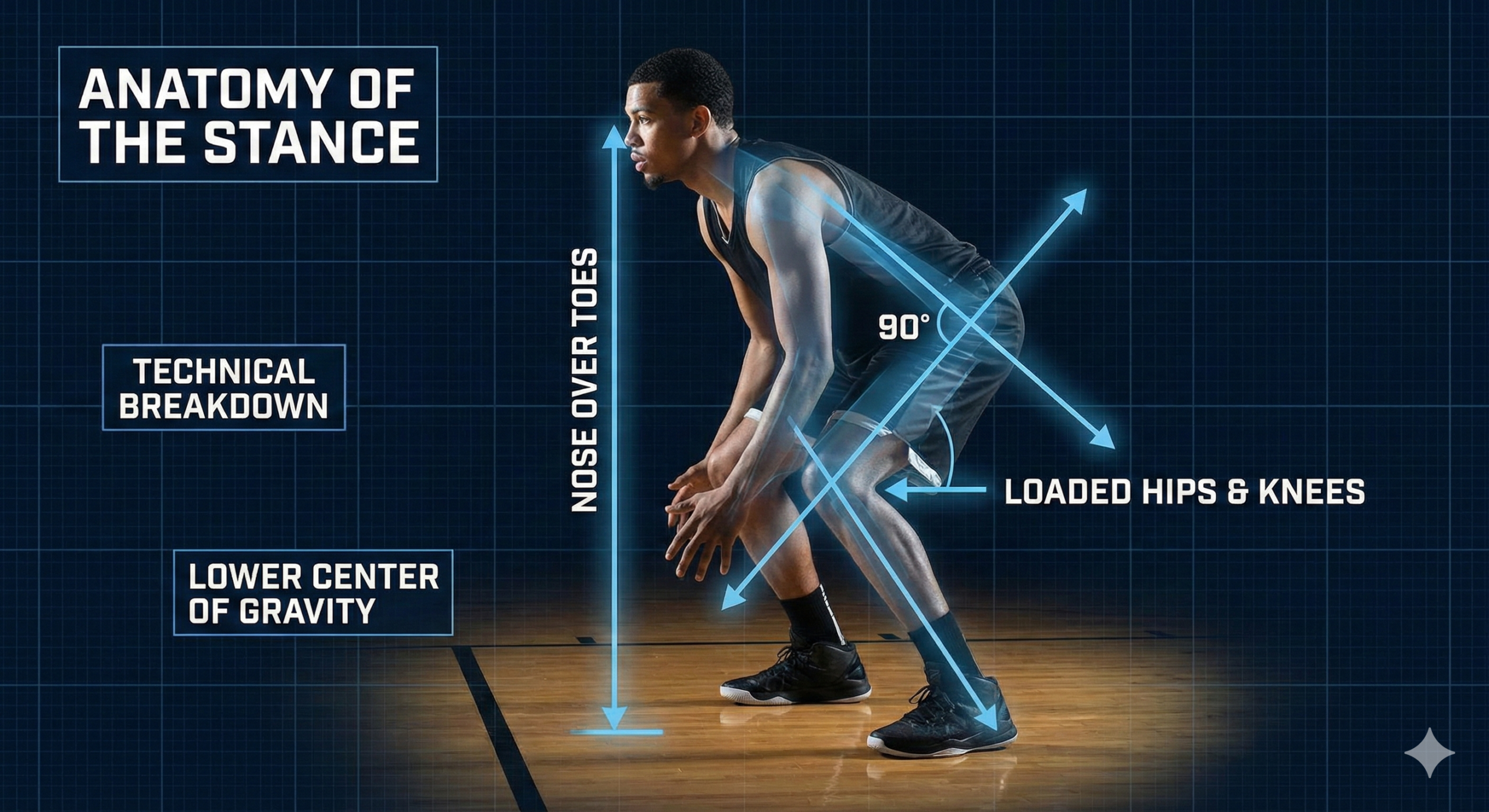
Everything in basketball starts with the Athletic Stance.
- The Mechanics: Feet shoulder-width apart, knees bent, hips loaded, and “nose over toes.”
- The Impact: This low centre of gravity is non-negotiable. When a player stands too tall, they are easily knocked off balance by a defender. Conversely, a strong base allows you to absorb contact and explode into a drive. Poor footwork is also the leading cause of travelling violations; if your feet aren’t disciplined, you will shuffle before you dribble, resulting in a turnover before the play even starts.
Efficiency vs. Speed
There is a major difference between improving basketball foot speed and improving efficiency.
- The “False Step”: Many amateurs, when trying to drive right, will first take a tiny step backwards with their left foot to load up. This is called a “false step.” It adds 0.2 seconds to your move—just enough time for the defence to recover.
- The Fix: Great footwork eliminates wasted motion. It allows you to move sooner, not just faster. By refining your pivots and drop steps, you become quicker without actually needing to run faster sprints.
Injury Prevention: The Art of Landing
Perhaps the most critical aspect of footwork training is safety. Basketball involves high-impact landings on hard surfaces.
- The Jump Stop: Teaching players to land on two feet simultaneously (the jump stop) rather than one allows for better force dissipation.
- ACL Protection: Proper footwork teaches athletes to land with knees bent and aligned over the toes, rather than caving inward (valgus collapse), which is a primary mechanism for ACL tears. Building these habits at home ensures they happen automatically in the chaos of a game.
Owning Your Space (The Pivot)
Before you ever put the ball on the floor, you must be able to protect it. The pivot is the most under-practised skill in youth basketball, yet it is the primary weapon against aggressive defensive pressure.
In our list of basketball footwork drills for home, this is the starting point because it teaches “foot discipline.” If you can’t control your feet while standing still, you won’t control them at full speed.
The Setup: Glue the Foot
- The Rule: Pick a spot on your rug, garage floor, or driveway. Imagine your left foot is nailed to that spot. It can spin, but it cannot slide, lift, or change location.
- The Stance: Get into your low athletic stance (wide base). Hold the ball strong with two hands (“chin it” or “rip it”).
The Forward Pivot
This is an aggressive move used to attack space or shield the ball.
- The Action: Keep your left foot planted. Step forward with your right foot as if you are stepping through a defender.
- The Mental Check: Imagine a defender is standing right in your face. Pivot hard to put your shoulder into their chest (creating contact).
- The Reps: Do 20 pivots forward, then switch your pivot foot.
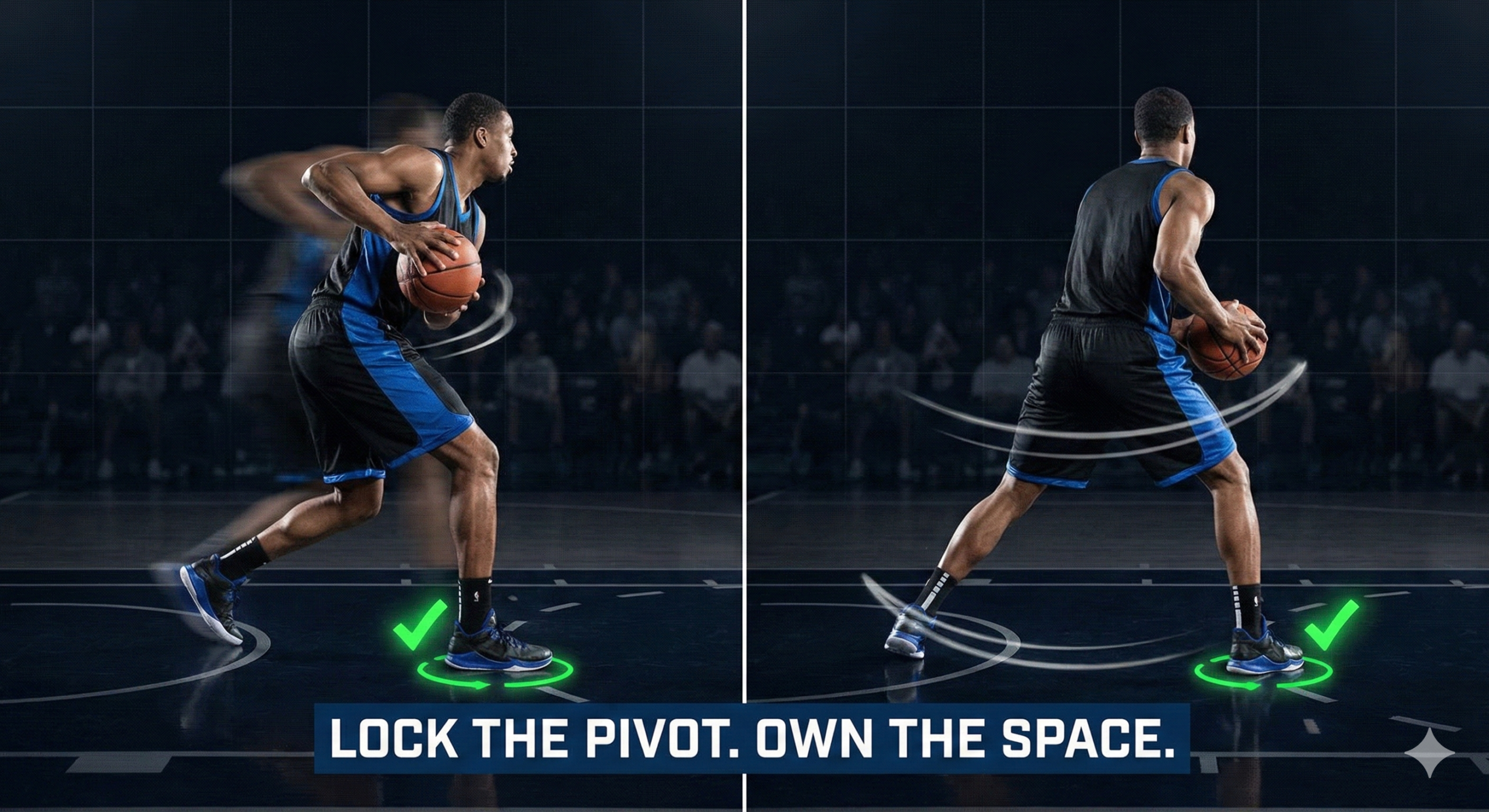
The Reverse Pivot (The Sweep)
This is your “escape valve.” When a defender cuts you off, you reverse pivot to create instant separation.
- The Action: instead of stepping forward, you swing your right foot backward in a semi-circle.
- The “Sweep”: As you pivot, rip the ball low (below your knees) to prevent the defender from reaching in.
- The Visualization: You are creating a gap to see the floor or pass to a teammate.
Common Mistakes: “Popcorn Feet”
The biggest enemy of a solid pivot is “popcorn feet”—bouncing up and down.
- The Error: Lifting the heel of the pivot foot. Once that heel comes up, you lose balance and leverage.
- The Fix: Keep your pivot heel glued to the floor. Spin on the ball of the foot, but keep the weight distributed.
Pro Tip: Do this in front of a mirror. If you see your head bobbing up and down, you are coming out of your stance. Stay low!
Creating Space in a Phone Booth
The “Triple Threat” position (where you can shoot, pass, or drive) is the most dangerous position in basketball. However, most players ruin it by immediately putting the ball on the floor.
Great scorers use their feet to move the defender before they move the ball. You don’t need a 3-point line to practice this; you just need enough room to take one hard step. This series teaches you how to manipulate a defender’s balance while keeping yours perfectly still.
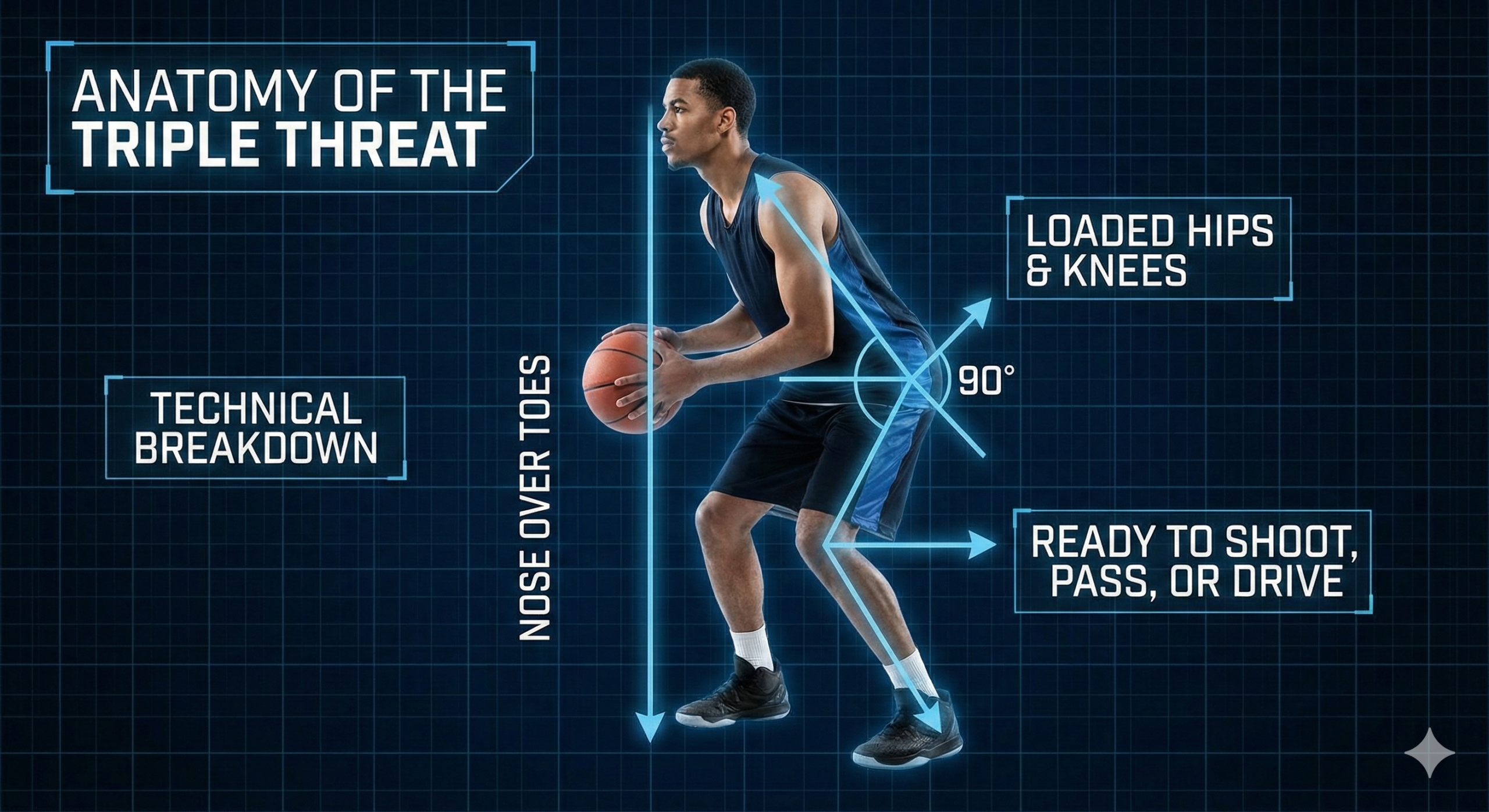
The “Short Jab”: Testing the Waters
This is a quick, violent staccato step.
- The Move: While keeping your pivot foot nailed down, jab your non-pivot foot forward about 6–12 inches.
- The Purpose: You are testing the defender. Do they flinch? Do they back up? The “Short Jab” forces them to respect the drive without over-committing your own weight.
- The Key: Keep your weight centered. If you lean too far forward on a short jab, you lose your ability to shoot or drive the other way.
The “Long Jab” (The Rocker Step)
If the defender didn’t bite on the short jab, it’s time to sell the drive harder.
- The Move: Take a long, aggressive step toward the defender’s lead foot.
- The “Sell”: This only works if your body language lies. Drop your shoulders and look at the rim or the floor as if you are exploding past them.
- The Rocker: If they back up, “rock” your weight back to your pivot foot. You have now created three feet of space for a jumper—without taking a dribble.
The “Crossover Step” (The Rip)
This is the counter-move. You jabbed right, and the defender jumped right to cut you off.
- The Move: Instead of bringing your foot back, step across your body with your non-pivot foot.
- The Seal: Aim to step past the defender’s hip. This “seals” them behind you, effectively eliminating them from the play.
- The Rip: Simultaneously “rip” the ball from one side of your body to the other (low and strong) to protect it from a steal.
The “Tape Ladder” Workout
You have probably seen pro athletes using yellow plastic agility ladders to train their foot speed. It’s a staple for agility ladder drills for basketball because it forces your brain to communicate with your feet at high speeds.
But you don’t need to order equipment from Amazon to get this work in. You just need a roll of masking tape and 10 minutes.
DIY Setup: The Bedroom Grid
If you don’t have a ladder, build one.
- The Build: Use masking tape or painter’s tape to mark out a “ladder” on your floor. Create 6–8 boxes, each about 1.5 feet square.
- The Benefit: This eliminates the excuse of “I don’t have the gear.” If you have a floor, you have a gym.
The “Icky Shuffle”
This is the gold standard for footwork coordination. It teaches you to move rhythmically while keeping your center of gravity under control.
- The Pattern: It’s a 3-step rhythm: In, In, Out.
- Step into the box with your left foot.
- Step in with your right foot.
- Step outside the box to the right with your left foot.
- Repeat the pattern moving forward, alternating the “out” foot.
- The Focus: Don’t look at your feet! Keep your chin up. In a game, if you look down, you miss the open teammate.
Two-In, Two-Out (Lateral Speed)
Basketball is rarely played in a straight line. This variation builds lateral (side-to-side) quickness.
- The Pattern: Stand facing the side of your ladder.
- Step two feet in the box (Left, Right).
- Step two feet out the back of the box (Left, Right).
- Move to the next box and repeat.
- The Burn: This mimics the rapid-fire steps needed to stay in front of a ball handler who is hesitating and probing your defense.
The Quiet Work That Makes the Loud Noise
You don’t need a rim to become a scorer. You need feet that can get you to the rim.
If you commit to these five basketball footwork drills for home, you will return to the court a different player. You will feel lighter, quicker, and more in control. The game will seem to “slow down” because your body is no longer struggling to keep up with your brain.
But here is the “Character Challenge”: Footwork is tedious. It isn’t flashy. You won’t get 1,000 likes on Instagram for posting a video of a defensive slide. It is quiet, repetitive, and unglamorous work.
Doing the boring work when no one is watching? That is the definition of discipline. That is the difference between a player who plays the game and a player who masters it.
So, clear out the furniture, tape up your floor, and get to work. Your future self—and your future stats—will thank you.